
Macro Cycle

SE Asia’s Share of Global OSAT Capacity Breaks 20% for the First Time
Outsourced Semiconductor Assembly and Test (OSAT) has long been the quiet backbone of the chip industry, turning bare wafers into usable, reliable packaged devices. For decades, much of the attention has focused on front‑end fabrication hubs in the US, Europe, Taiwan, Korea, and increasingly China.

Regional Reconfiguration of Global Semi Supply Chain: US-EU-SEA Triangle
The global semiconductor supply chain is undergoing a profound regional restructuring. Instead of a largely Asia‑centric manufacturing network feeding design and demand hubs elsewhere, the industry is evolving into a more segmented, multi‑pole system anchored by three increasingly distinct regions: the United States, the European Union, and Southeast Asia (SEA).

2H 2026 Semi Order Visibility Survey: Views from 50 Procurement Managers
As the semiconductor industry enters the second half of 2026, procurement teams find themselves in a markedly different environment than the one that defined the past three years. Shortages and emergency allocation have receded, inventories have largely normalized, and new regional capacity is ramping under various industrial policy programs.

Europe’s Chips Act Catch-Up Dilemma: The Gap Between Capacity Targets and Reality
Europe’s Chips Act was launched with a bold ambition: to roughly double the continent’s share of global semiconductor production and secure strategic autonomy in a technology that underpins everything from cars and industrial equipment to cloud computing and defense systems. Policymakers framed it as a catch‑up mechanism—Europe would move from dependence on foreign fabs toward a more balanced, resilient ecosystem.

The Structural Contradiction of Layoffs and Mass Hiring Co-Existing in Semi Industry
The semiconductor industry has always been cyclical, but the current moment feels particularly paradoxical. In the same headlines, we see announcements of layoffs, hiring freezes, and project cancellations alongside news of massive recruitment drives, new fab construction, and aggressive talent campaigns.
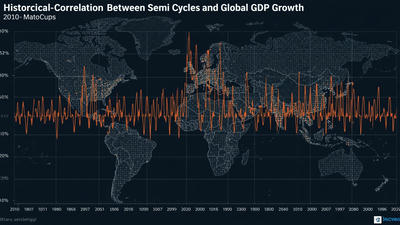
Historical Correlation Between Semi Cycles and Global GDP Growth
Semiconductor industry cycles and global GDP growth are deeply intertwined. Semiconductors power consumer electronics, data centers, automobiles, industrial automation, and countless embedded systems that form the backbone of modern economic activity. Conversely, macroeconomic conditions shape consumer demand, corporate capex, and the financing environment that determine fab investment and inventory behavior.
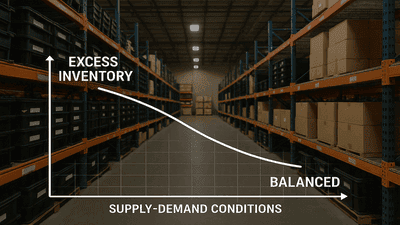
Inventory Adjustment Done – Lead Times Shorten to Normal Levels
The semiconductor industry has finally exited a long and painful inventory adjustment phase. After years of oscillating between shortages and surplus, channel inventories and supplier stock levels have normalized, and lead times for many critical components are returning to what manufacturers recognize as “normal” ranges.

SiC and GaN 3rd-Gen Semi Penetration Rates Breach the Tipping Point
For years, silicon carbide (SiC) and gallium nitride (GaN) were discussed as promising “next‑generation” power semiconductor materials with clear technical advantages but limited commercial deployment. Their adoption curves were slow, constrained by cost, supply chain maturity, and conservative design practices in automotive and industrial markets.

Global Semi Sales Post 8 Consecutive Months of Positive Growth, New Uptrend Confirmed
The semiconductor industry has crossed a meaningful threshold: eight consecutive months of positive year‑over‑year sales growth. That streak signals more than a short-term rebound. It suggests a structural rebalancing between demand and supply, improved capital discipline across the value chain, and the emergence of durable demand drivers that could support a multi‑quarter uptrend. For investors, OEMs, procurement teams, engineers, and policymakers, this turning point requires a shift in tactics—from defensive cost control and aggressive destocking toward selective restocking, targeted investment, and technology prioritization. This article examines why eight months matters, what’s driving the recovery, which subsegments will benefit most, the risks that remain, and practical actions stakeholders can take now.
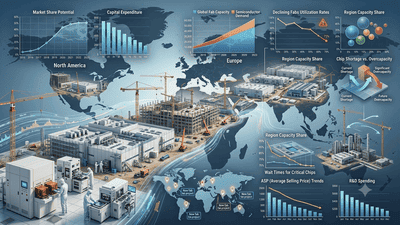
Reassessing Global Semi Overcapacity Risks: A 2027 Outlook
Semiconductor capacity is expanding at a pace the industry has rarely seen. From large-scale fab projects in the United States and Europe to continued investments across Asia, the global wafer and packaging footprint heading into 2027 looks very different from what it was just a few years ago.